
Dairy-Free Honey Garlic Salmon (Easy 30-Minute Dinner)
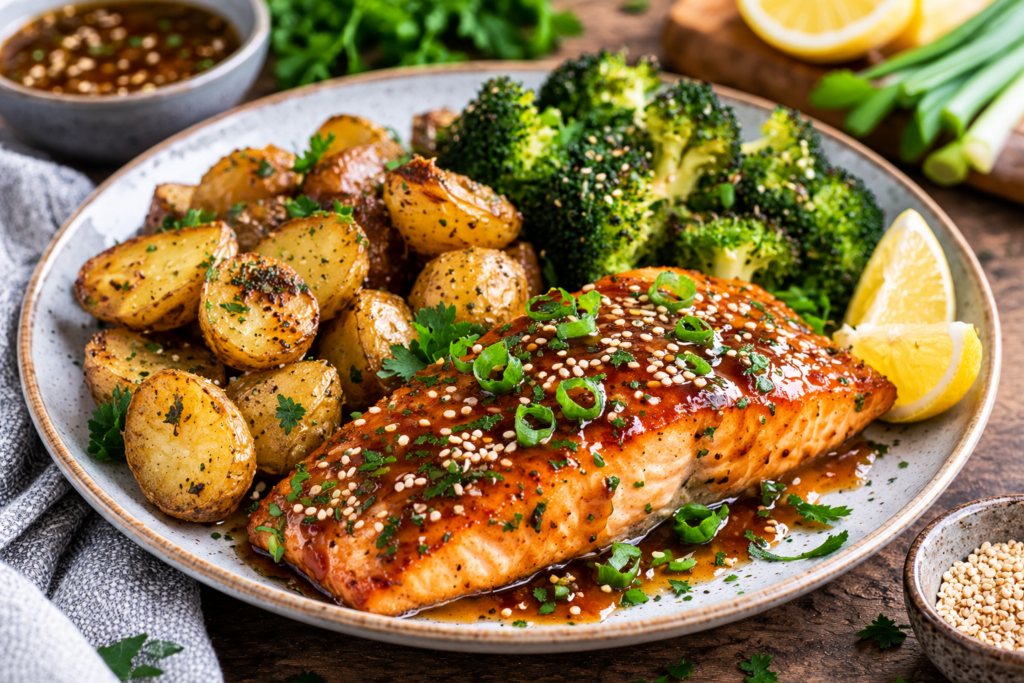
This dairy-free honey garlic salmon combines tender, flaky salmon with a sticky homemade glaze made from honey, garlic, lemon, and soy sauce. Served with crispy roasted potatoes and green vegetables, it’s an easy but impressive dinner that’s ready in about 30 minutes.
Why You’ll Love This Dairy-Free Honey Garlic Salmon
Salmon is one of the easiest ways to create a dinner that feels a little special without spending hours in the kitchen.
The salmon is first seared to develop a golden exterior, then coated with a sweet and savory honey garlic glaze. Fresh lemon juice keeps the sauce bright and balanced, while garlic and soy sauce add plenty of savory flavor.
The result is tender salmon with a glossy, caramelized coating that pairs beautifully with roasted vegetables, rice, or potatoes.
Recipe highlights:
- 100% dairy-free
- Ready in about 30 minutes
- Medium difficulty
- High in protein
- Sweet and savory glaze
- Great for weeknight dinners
- Impressive enough for guests
- Easy to customize
Recipe at a Glance
| Prep | 10 minutes |
| Cook | 20 minutes |
| Servings | 4 servings |
| Difficulty | Medium |
Ingredients
For the Salmon
- 4 salmon fillets, approximately 150–180 g (5–6 oz) each
- ½ teaspoon salt
- ¼ teaspoon black pepper
- 1 tablespoon olive oil
- 1 teaspoon smoked paprika
For the Honey Garlic Glaze
- 3 tablespoons honey
- 2 tablespoons low-sodium soy sauce or tamari
- 3 garlic cloves, finely minced
- 1 tablespoon fresh lemon juice
- 1 teaspoon Dijon mustard
- 1 teaspoon sesame oil
- ½ teaspoon grated fresh ginger
- 2 tablespoons water
For the Roasted Potatoes
- 600 g (1.3 lb) baby potatoes
- 1 tablespoon olive oil
- ½ teaspoon garlic powder
- ½ teaspoon dried oregano
- ¼ teaspoon salt
- ¼ teaspoon black pepper
For Serving
- Steamed broccoli or green beans
- Fresh parsley
- Lemon wedges
- Sesame seeds
- Sliced spring onions
Equipment
- Large oven-safe skillet
- Baking sheet
- Parchment paper
- Small mixing bowl
- Whisk
- Sharp knife
- Cutting board
- Spatula
- Measuring spoons
Step-by-Step Instructions
Step 1: Prepare the Potatoes
Preheat your oven to 220°C (425°F).
Wash the baby potatoes and cut larger ones in half.
Place them on a baking sheet.
Add olive oil, garlic powder, oregano, salt, and black pepper.
Toss until evenly coated.
Arrange the potatoes cut-side down where possible.
Step 2: Roast the Potatoes
Roast the potatoes for approximately 20–25 minutes, turning them halfway through cooking.
They should be golden on the outside and tender in the center.
Step 3: Make the Honey Garlic Glaze
While the potatoes are roasting, prepare the glaze.
Add the honey, soy sauce, garlic, lemon juice, Dijon mustard, sesame oil, ginger, and water to a small bowl.
Whisk until well combined.
Set aside.
Step 4: Prepare the Salmon
Pat the salmon fillets dry with paper towels.
Season both sides with salt, black pepper, and smoked paprika.
Allow the salmon to sit for a few minutes while you heat the skillet.
Step 5: Sear the Salmon
Heat the olive oil in a large oven-safe skillet over medium-high heat.
Place the salmon fillets skin-side down if the skin is still attached.
Cook for approximately 3–4 minutes without moving them.
The bottom should become golden and slightly crisp.
Carefully turn the salmon and cook for another 1–2 minutes.
Step 6: Add the Glaze
Reduce the heat to medium-low.
Pour the honey garlic glaze into the skillet around the salmon.
Use a spoon to gently coat the tops of the salmon with the sauce.
Allow the sauce to simmer for approximately 2–3 minutes.
It will begin to thicken and become glossy.
Step 7: Finish Cooking the Salmon
Continue cooking the salmon gently until it reaches an internal temperature of approximately 63°C (145°F).
The exact cooking time depends on the thickness of the fillets.
Avoid overcooking the salmon because it can quickly become dry.
Step 8: Glaze Again
Once the salmon is cooked, spoon the thickened honey garlic sauce over each fillet one more time.
Sprinkle with sesame seeds and sliced spring onions.
Step 9: Serve
Place a salmon fillet on each plate.
Serve with roasted potatoes and steamed broccoli or green beans.
Add fresh parsley and a lemon wedge.
Spoon any remaining honey garlic sauce from the skillet over the salmon.
Serve immediately.
Tips for the Best Dairy-Free Honey Garlic Salmon
- Pat the salmon dry before seasoning.
- Use salmon fillets that are similar in thickness so they cook evenly.
- Don’t move the salmon too much while searing.
- Keep the glaze at medium-low heat once the honey is added.
- Watch the sauce carefully because honey can burn quickly.
- Use fresh garlic and lemon juice for the best flavor.
- Don’t overcook the salmon.
- Spoon the glaze over the salmon several times while cooking.
For the best texture, remove the salmon from the heat as soon as it reaches the desired internal temperature.
Delicious Variations
| Spicy Honey Garlic Salmon | Add ½–1 teaspoon of chili flakes or sriracha to the glaze. |
| Maple Garlic Salmon | Replace the honey with maple syrup for a slightly different sweetness. |
| Orange Garlic Salmon | Replace half of the lemon juice with fresh orange juice and add a little orange zest. |
| Sesame Ginger Salmon | Increase the fresh ginger and sesame oil, then finish with extra sesame seeds. |
| Honey Garlic Shrimp | Use the same glaze with large shrimp. Reduce the cooking time significantly. |
| Honey Garlic Salmon Bowls | Serve the salmon over steamed rice with broccoli, cucumber, carrots, avocado, and spring onions. |
How to Store Dairy-Free Honey Garlic Salmon
In the Refrigerator
Store leftover salmon in an airtight container for up to 2 days.
Keep the roasted potatoes and vegetables separate if possible.
Reheating
Reheat gently in a skillet over low heat.
Add a small splash of water to the pan and cover loosely to help prevent the salmon from drying out.
You can also eat the salmon cold over a salad or rice bowl.
Freezing
Cooked salmon can be frozen for up to 2 months, although the texture is best when eaten fresh.
Allow it to cool completely before freezing.
Common Mistakes to Avoid
Starting With Wet Salmon
Moisture prevents the salmon from developing a good sear. Pat it dry first.
Using High Heat for the Glaze
Honey can burn quickly. Reduce the heat before adding the glaze.
Overcooking the Salmon
Salmon continues cooking slightly after being removed from the heat.
Moving the Salmon Too Much
Let the salmon develop a crust before turning it.
Making the Glaze Too Thick
The glaze should coat the salmon without becoming sticky or burnt.
Skipping the Lemon
The acidity from lemon helps balance the sweetness of the honey.
What Makes This Salmon Dairy-Free?
Salmon is naturally dairy-free, and the homemade glaze doesn’t require butter, cream, or cheese.
Instead, olive oil provides the cooking fat while honey, soy sauce, garlic, ginger, and lemon create the flavorful glaze.
| Traditional Ingredient | Dairy-Free Alternative |
|---|---|
| Butter | Olive oil |
| Cream sauce | Honey garlic glaze |
| Cheese topping | Sesame seeds and herbs |
| Buttered vegetables | Olive oil-roasted vegetables |
Always check the labels on soy sauce, mustard, broth, and other packaged ingredients if you’re following a strict dairy-free diet.
Serving Suggestions
Serve this honey garlic salmon with:
- Roasted baby potatoes
- Steamed broccoli
- Green beans
- Rice
- Quinoa
- Roasted asparagus
- Cucumber salad
- Stir-fried vegetables
- Mixed green salad
- Lemon wedges
For a colorful dinner, serve the salmon with roasted potatoes, broccoli, and a fresh cucumber salad.
Nutritional Information (Approximate Per Serving)
| Nutrient | Amount |
|---|---|
| Calories | 570 |
| Carbohydrates | 43 g |
| Fat | 26 g |
| Protein | 42 g |
| Fiber | 5 g |
| Sugar | 17 g |
Values are approximate and depend on the specific ingredients used.
Why This Honey Garlic Salmon Is So Flavorful
The glaze works because it combines several contrasting flavors.
Honey provides sweetness and helps the salmon develop a beautiful caramelized exterior. Soy sauce contributes saltiness and umami, while garlic and ginger add warmth and depth.
Fresh lemon juice cuts through the sweetness and keeps the sauce bright.
Searing the salmon before adding the glaze also creates a golden crust that gives the dish an extra layer of texture and flavor.
The result is tender salmon covered in a sticky, glossy sauce that’s sweet, savory, tangy, and aromatic.
Final Thoughts
This dairy-free honey garlic salmon is a great recipe when you want something healthier and lighter than many comfort-food dinners without sacrificing flavor.
The combination of golden salmon, sticky honey garlic glaze, crispy roasted potatoes, and fresh vegetables creates a balanced meal that’s impressive enough for guests but simple enough for a weeknight.
It’s also an excellent recipe for expanding your dairy-free collection beyond chicken, beef, and pasta.
Frequently asked Questions

Is salmon naturally dairy-free?
Yes. Plain salmon is naturally dairy-free. The ingredients used to prepare it are what you need to check for dairy.
Can I use frozen salmon?
Yes. Thaw the salmon completely in the refrigerator and pat it very dry before cooking.
Can I use maple syrup instead of honey?
Absolutely. Maple syrup is an excellent alternative and keeps the glaze dairy-free.
Can I use skinless salmon?
Yes. Skinless salmon works perfectly. Just be a little more careful when turning the fillets.
How do I know when the salmon is done?
The thickest part should reach approximately 63°C (145°F). The flesh should also flake easily with a fork.
Can I cook the salmon in the oven?
Yes. Place the salmon in a baking dish, brush generously with the glaze, and bake at approximately 200°C (400°F) until cooked through. Add another layer of glaze near the end.
Check out also our other recipes!
If you loved this Honey Garlic Salmon, there’s plenty more to discover. Explore MyDairyFreeRecipes for easy dinners, dairy-free breakfasts, healthy work lunches, creamy sauces without dairy, festive desserts, and beginner-friendly baking tips. Whether you’re cooking for everyday meals or special occasions, you’ll find simple, delicious recipes that make dairy-free eating easy and enjoyable.