

Dairy-Free Christmas Stuffing (Sage, Onion & Herb)
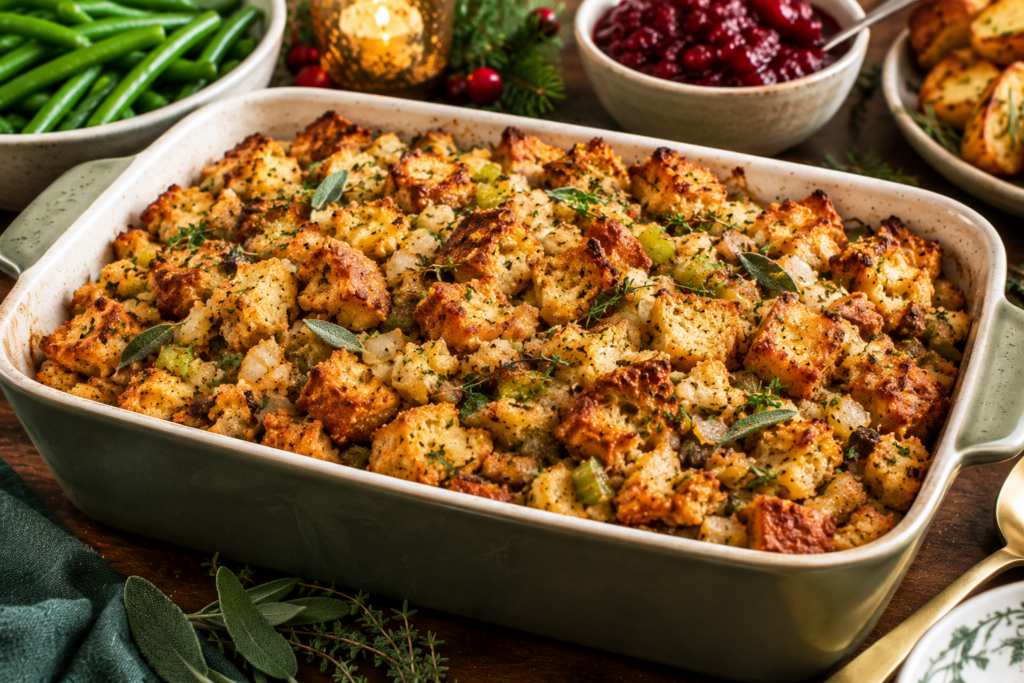
This Dairy-Free Christmas Stuffing is packed with savory herbs, sweet sautéed onions, and golden, crispy edges. Made with simple bread, vegetable broth, olive oil, and classic festive seasonings, it’s a comforting side dish that belongs on any Christmas dinner table.
Traditional stuffing recipes often use butter, but this version uses olive oil to create a moist, flavorful center and a beautifully crisp top without any dairy. Fresh sage, thyme, and parsley give the stuffing its familiar holiday aroma, while vegetable broth brings all the ingredients together.
Whether you’re serving roast turkey, chicken, beef, or a plant-based Christmas main, this easy stuffing is a delicious addition to your festive menu. You can also prepare much of it ahead of time, making Christmas Day cooking less stressful.
Why You’ll Love This Dairy-Free Christmas Stuffing
Classic holiday flavor: Sage, thyme, parsley, onion, and garlic create the traditional savory taste associated with Christmas stuffing.
Crispy on top and tender inside: Baking the stuffing in a dish gives you a golden crust while keeping the center moist and flavorful.
Completely dairy-free: Olive oil replaces butter, so there’s no need for dairy-free margarine or complicated substitutes.
Easy to prepare: The recipe uses everyday ingredients and straightforward steps, making it suitable for beginner cooks.
Perfect for a festive dinner: Serve it alongside roast potatoes, dairy-free gravy, roasted vegetables, and your favorite holiday main.
Easy to customize: Add mushrooms, apples, dried cranberries, or chopped nuts for a different flavor and texture.
Recipe at a Glance
| Prep | 20 minutes |
| Cook | 40-45 minutes |
| Servings | 6-8 servings |
| Difficulty | Easy |
Ingredients
- 1 lb (450 g) day-old bread, cut into small cubes
- 3 tablespoons olive oil
- 1 large yellow onion, finely chopped
- 3 celery stalks, finely chopped
- 3 garlic cloves, minced
- 2 tablespoons fresh sage, finely chopped
- 1 tablespoon fresh thyme leaves
- ¼ cup (15 g) fresh parsley, chopped
- 1½–2 cups (360–480 ml) vegetable broth
- 1 teaspoon dried rosemary, crushed
- ½ teaspoon freshly ground black pepper
- ½ teaspoon salt, or to taste
- 2 tablespoons ground flaxseed mixed with 5 tablespoons water (optional, for a more cohesive texture)
- Olive oil for greasing the baking dish
Choosing the Best Bread
A sturdy loaf works best because it absorbs the broth without becoming mushy. Sourdough, rustic white bread, or a French-style loaf are good options. Day-old bread is ideal because it is drier and holds its shape better.
If your bread is fresh, cut it into cubes and dry it in a 300°F (150°C) oven for 15–20 minutes, stirring once, until dry but not deeply browned. Let it cool before mixing the stuffing.
Check the bread label if you’re cooking for someone with a milk allergy, as some packaged breads contain milk or butter.
Equipment
- Large baking dish, approximately 9 x 13 inches (23 x 33 cm)
- Large skillet or frying pan
- Large mixing bowl
- Sharp knife and chopping board
- Measuring cups and spoons
- Wooden spoon or spatula
- Aluminum foil
Step-by-Step Instructions
Step 1: Prepare the Bread
Preheat your oven to 375°F (190°C), or 170°C fan. Cut the day-old bread into roughly ½-inch (1–1.5 cm) cubes and place them in a large mixing bowl.
If the bread is still soft or fresh, spread the cubes on a baking tray and dry them in the oven for 15–20 minutes. Allow them to cool slightly before using. Dry bread absorbs the seasoned broth more evenly and helps prevent soggy stuffing.
Step 2: Sauté the Onion and Celery
Heat the olive oil in a large skillet over medium heat. Add the chopped onion and celery and cook for 7–9 minutes, stirring occasionally, until softened and beginning to turn golden.
This step develops the sweetness of the vegetables and creates a flavorful base for the stuffing. Avoid rushing it, as lightly browned onions add more depth than onions that have only just softened.
Step 3: Add the Garlic and Herbs
Stir in the minced garlic, sage, thyme, rosemary, and black pepper. Cook for another 1–2 minutes, stirring frequently, until fragrant.
Remove the skillet from the heat and stir in the chopped parsley. The herbs should smell aromatic without becoming burnt or overly browned.
Step 4: Combine the Bread and Vegetables
Add the sautéed vegetable mixture to the bowl of bread cubes. Toss gently with a large spoon until the herbs and vegetables are distributed throughout the bread.
If you’re using the optional flaxseed mixture, stir it in now. It can help bind the stuffing together, particularly if you prefer a firmer texture that holds its shape when served.
Step 5: Add the Vegetable Broth
Pour about 1½ cups (360 ml) of vegetable broth over the bread mixture, tossing as you go. Allow the bread to absorb the liquid for a minute before deciding whether it needs more.
The bread should feel moist throughout but should not be swimming in liquid. Add the remaining broth gradually, as different types of bread absorb different amounts.
Step 6: Transfer to the Baking Dish
Lightly grease your baking dish with olive oil. Spoon the stuffing mixture into the dish and spread it into an even layer.
For a softer stuffing, press the mixture down gently and cover the dish with foil. For a crispier top, leave the surface loose and uneven so the bread can develop golden edges.
Step 7: Bake Until Golden
Cover the dish with foil and bake for 25 minutes. Remove the foil and continue baking for another 15–20 minutes, until the top is golden brown and crisp.
If you prefer a very crunchy top, bake for a few extra minutes while watching carefully to prevent the herbs and bread from burning. The center should be hot throughout before serving.
Step 8: Rest and Serve
Remove the stuffing from the oven and let it rest for 5 minutes. This gives the bread a little time to settle and makes the stuffing easier to serve.
Scatter over a little fresh parsley or thyme if desired. Serve warm with dairy-free Christmas gravy, roast potatoes, and your favorite festive main course.
Tips for Making the Best Dairy-Free Christmas Stuffing
Use dry bread. Fresh, soft bread can become heavy and soggy when broth is added. Day-old bread or oven-dried cubes produce a better texture.
Add the broth gradually. Start with less broth and add more only when needed. The mixture should be moist but not waterlogged.
Cook the vegetables first. Sautéing the onion and celery softens them and develops their flavor before they go into the oven.
Use fresh herbs when possible. Fresh sage, thyme, and parsley give stuffing a bright, fragrant holiday flavor. Dried herbs can work too, but use smaller amounts because their flavor is more concentrated.
Don’t pack the mixture too tightly. A lightly packed stuffing has more surface area for crisping. Press it down only enough to create an even layer.
Adjust the texture to your preference. Covering the dish for the first part of baking helps keep the stuffing moist, while uncovering it allows the top to become golden and crunchy.
Delicious Variations
| Apple and Sage Christmas Stuffing | Peel and finely dice one small apple, then sauté it with the onion and celery. Its gentle sweetness pairs beautifully with sage and thyme and adds a festive touch to the stuffing. |
| Cranberry and Pecan Stuffing | Stir in ⅓ cup (40 g) dried cranberries and ⅓ cup (35 g) chopped pecans before adding the broth. The cranberries bring a sweet-tart flavor, while the pecans add crunch. Check labels if you’re cooking for guests with allergies. |
| Mushroom and Herb Stuffing | Add 200 g finely chopped mushrooms to the skillet after the onion and celery begin to soften. Cook until the mushrooms release their moisture and start to brown, then continue with the recipe. This version has a deeper, earthy flavor that pairs especially well with vegan nut roast. |
| Gluten-Free Dairy-Free Stuffing | Use a sturdy gluten-free loaf and check that the vegetable broth and seasonings are gluten-free. Gluten-free bread can absorb liquid differently, so add the broth slowly and stop when the bread is moist but still holds its shape. |
| Sausage-Style Stuffing | For a meat-based version, cook 250 g of dairy-free sausage or regular sausage meat with the onion and celery until thoroughly cooked, then continue with the recipe. If using meat, ensure it reaches a safe internal temperature and keep the stuffing refrigerated until baking. |
| Extra-Herby Stuffing | Increase the fresh parsley slightly and add a little extra thyme and sage. This is a great option if you want the traditional savory flavor to stand out alongside rich mains and gravy. |
How to Store Dairy-Free Christmas Stuffing
In the Refrigerator
Allow the stuffing to cool and refrigerate it in a shallow, airtight container within 2 hours of cooking. Store for up to 3–4 days.
Reheating
Place the stuffing in an oven-safe dish, add a small splash of broth if it seems dry, cover with foil, and reheat at 350°F (175°C) until piping hot throughout. Remove the foil for the final few minutes if you’d like to restore the crispy top.
You can also microwave individual portions, although the texture will be softer.
Freezing
Yes. Once fully cooked and cooled, portion the stuffing into freezer-safe containers and freeze for up to 3 months for best quality. Thaw in the refrigerator overnight and reheat until piping hot throughout.
For the best texture, you can also freeze the prepared, unbaked mixture in a suitable freezer-safe dish. Thaw it safely in the refrigerator before baking and check that it is heated through before serving.
Common Mistakes to Avoid
Using bread that’s too fresh: Soft bread absorbs liquid quickly and can turn mushy. Dry the cubes before mixing if necessary.
Adding too much broth: The stuffing should be moist, not soupy. Add liquid gradually and let the bread absorb it before adding more.
Skipping the sautéing step: Raw onion and celery may remain too firm and have a sharper flavor. Cooking them first creates a softer texture and deeper taste.
Overbaking the stuffing: Too much oven time can dry out the center. Cover the dish for the first part of baking and uncover it only to crisp the top.
Burning the herbs or garlic: Add the garlic and herbs toward the end of sautéing and stir frequently to keep them fragrant rather than bitter.
Ignoring food safety: If adding raw sausage meat, cook it thoroughly and ensure the center of the stuffing reaches a safe temperature. Refrigerate leftovers promptly.
What Makes This Christmas Stuffing Dairy-Free?
Traditional stuffing recipes often use butter to sauté the vegetables and moisten the bread. This recipe uses olive oil instead, providing richness while keeping the dish free from milk, butter, cream, and cheese.
Vegetable broth supplies moisture and savory flavor, while the herbs create the classic festive taste. The recipe is vegan when you use bread, broth, and any optional ingredients that contain no animal products.
If you’re cooking for someone with a milk allergy, check the labels on the bread and broth and avoid cross-contact with butter or dairy-containing ingredients.
Serving Suggestions
This stuffing is a natural fit for a festive roast dinner. Serve it alongside:
- Dairy-Free Christmas Roast Potatoes: Crispy potatoes make a perfect companion to the tender, herb-filled stuffing.
- Dairy-Free Christmas Gravy: Spoon warm gravy over the stuffing just before serving for a classic holiday combination.
- Dairy-Free Green Bean Casserole: Add a creamy-style vegetable side with mushroom sauce and crispy onions.
- Roast Turkey or Chicken: Pair the stuffing with sliced roast poultry and seasonal vegetables.
- Vegan Nut Roast: The sage and onion flavors complement lentil-based mains and nut roasts.
- Roasted Carrots and Parsnips: Sweet roasted vegetables balance the savory herbs in the stuffing.
- Cranberry Sauce: A little sweet-tart cranberry sauce adds color and freshness to the plate.
For a complete dairy-free Christmas dinner, serve the stuffing with roast potatoes, gravy, two vegetable sides, and a main course of your choice.
Nutritional Information (Approximate Per Serving)
| Nutrient | Amount |
|---|---|
| Calories | 220 |
| Carbohydrates | 34 g |
| Fat | 7 g |
| Protein | 6 g |
| Fiber | 3 g |
| Sugar | 4 g |
Values are approximate and depend on the specific ingredients used.
Why It’s Flavorful
The flavor of this dairy-free Christmas stuffing comes from the combination of sautéed vegetables, aromatic herbs, and broth-soaked bread. Onions become sweeter as they cook, celery adds a gentle savory note, and garlic deepens the overall flavor.
Sage gives the stuffing its unmistakable holiday character, while thyme and rosemary add warmth and fragrance. Olive oil helps coat the bread and vegetables, and baking creates the contrast between a crisp golden top and a soft, tender center.
The result is a classic festive side dish that feels comforting and familiar without needing butter.
Final Thoughts
This Dairy-Free Christmas Stuffing is a simple way to bring traditional holiday flavor to your festive table. With fragrant herbs, sweet onions, and a crispy golden top, it’s a delicious companion to roast potatoes, gravy, and seasonal vegetables.
It’s easy to adapt to different dietary needs, and you can prepare much of it ahead of time to make Christmas cooking more manageable. Serve it warm alongside your favorite main course for a comforting holiday meal that everyone can enjoy.
Frequently asked Questions

Can I Use Dried Herbs Instead of Fresh?
Yes. As a starting point, use about 2 teaspoons dried sage and 1 teaspoon dried thyme in place of the fresh herbs, adjusting to taste. Dried herbs are more concentrated, so avoid using the same volume as fresh herbs.
Why Is My Stuffing Soggy?
Too much broth or bread that hasn’t been dried properly is usually the cause. Add the liquid gradually, use day-old bread, and bake uncovered for long enough to crisp the top.
Can I Make This Recipe Vegan?
Yes. The recipe is vegan when prepared with olive oil, plant-based bread, and vegetable broth that contains no animal-derived ingredients. Check labels on all packaged ingredients.
Can I Cook Stuffing Inside a Turkey?
This recipe is designed to be baked separately in a dish, which makes it easier to control the texture and cooking time. If you choose to cook stuffing inside poultry, follow reliable food-safety guidance and ensure the center of the stuffing reaches 165°F (74°C). Never partially cook stuffed poultry and finish it later.
What Bread Is Best for Christmas Stuffing?
Day-old sourdough, rustic white bread, or a French-style loaf works well because it absorbs broth while maintaining some structure. Avoid very soft sandwich bread unless you dry it first.
How Can I Make the Stuffing Crispier?
Bake it in a wide dish so the mixture isn’t too deep, uncover it for the final 15–20 minutes, and leave the top slightly uneven. These steps increase the amount of bread exposed to the hot oven.
Check out also our other recipes!
If you loved this christmas stuffing, there’s plenty more to discover. Explore MyDairyFreeRecipes for easy dinners, dairy-free breakfasts, healthy work lunches, creamy sauces without dairy, festive desserts, and beginner-friendly baking tips. Whether you’re cooking for everyday meals or special occasions, you’ll find simple, delicious recipes that make dairy-free eating easy and enjoyable.