

Dairy-Free Christmas Gravy (Rich, Savory & Easy)
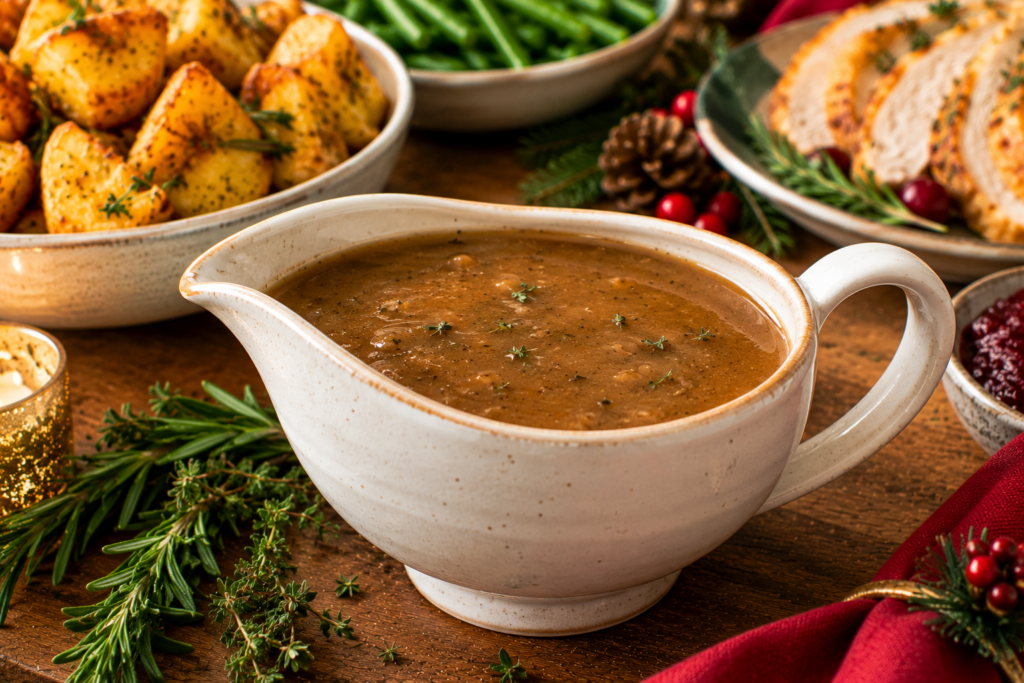
This Dairy-Free Christmas Gravy is rich, savory, and full of comforting holiday flavor. Made with sautéed onions, garlic, vegetable broth, and fragrant herbs, it delivers the smooth, satisfying texture you want from a classic Christmas gravy without using butter, cream, or other dairy products.
Whether you’re serving roast potatoes, turkey, roast beef, or a plant-based nut roast, this easy gravy brings the whole meal together. It uses simple pantry ingredients and takes just 25 minutes to prepare, making it a practical choice for busy holiday cooking.
The secret to flavorful gravy is building a strong base with golden onions, garlic, herbs, and a little Dijon mustard. A flour-and-olive-oil roux thickens the broth into a smooth sauce, while a small splash of soy sauce adds depth and a rich savory finish.
Why You’ll Love This Dairy-Free Christmas Gravy
Rich and savory flavor: Slowly sautéed onions, garlic, thyme, and rosemary create a deep, comforting flavor that tastes perfect with a festive roast dinner.
Completely dairy-free: Olive oil replaces butter, so there’s no need for cream or dairy-free butter substitutes.
Smooth and velvety texture: A simple roux thickens the broth into a pourable gravy that coats potatoes and vegetables beautifully.
Quick and easy: The gravy comes together in around 25 minutes using ingredients you may already have in your kitchen.
Perfect for holiday meals: Serve it with Christmas roast potatoes, green bean casserole, roasted vegetables, turkey, or a vegan nut roast.
Easy to make vegetarian or vegan: Use vegetable broth and check that your Worcestershire sauce, if using it, is vegan-friendly.
Recipe at a Glance
| Prep | 5 minutes |
| Cook | 20 minutes |
| Servings | 4 servings |
| Difficulty | Easy |
Ingredients
- 3 tablespoons olive oil
- 1 medium yellow onion, finely chopped
- 2 garlic cloves, minced
- 3 tablespoons all-purpose flour
- 2½ cups (600 ml) vegetable broth, preferably low-sodium
- 1 teaspoon soy sauce or tamari
- 1 teaspoon Dijon mustard
- ½ teaspoon dried thyme
- ½ teaspoon dried rosemary, crushed
- ¼ teaspoon onion powder
- ¼ teaspoon freshly ground black pepper
- Salt, to taste
- 1–2 teaspoons nutritional yeast (optional)
- 1 teaspoon vegan Worcestershire sauce (optional)
- 1–2 teaspoons cornstarch mixed with 1 tablespoon cold water, only if needed for extra thickening
Choosing the Best Broth
A good vegetable broth makes a big difference because it provides most of the gravy’s flavor. Choose a savory broth with a rich color and moderate salt level. If you have homemade vegetable stock, you can use it for an even more personal touch.
Equipment
Equipment
- Medium saucepan
- Sharp knife and chopping board
- Wooden spoon or whisk
- Measuring cups and spoons
- Fine-mesh sieve, optional
- Small bowl, if using the cornstarch slurry
A whisk is especially helpful when adding the broth, as it helps prevent lumps and creates a smooth gravy.
Step-by-Step Instructions
Step 1: Prepare the Ingredients
Finely chop the onion and mince the garlic. Measure the flour, broth, soy sauce, Dijon mustard, and herbs before you begin cooking.
Having everything ready makes the process easier, especially when you’re preparing several dishes for a holiday meal.
Step 2: Sauté the Onion
Heat the olive oil in a medium saucepan over medium heat. Add the chopped onion and cook for 6–8 minutes, stirring occasionally, until softened and lightly golden.
Don’t rush this stage. Allowing the onion to develop some color builds a deeper savory flavor and gives the finished gravy a more traditional taste.
Step 3: Add the Garlic and Herbs
Add the minced garlic, dried thyme, rosemary, onion powder, and black pepper. Cook for about 30–60 seconds, stirring continuously, until fragrant.
Avoid letting the garlic brown too much, as burnt garlic can make the gravy taste bitter.
Step 4: Make the Roux
Sprinkle the flour over the onion mixture and stir well so it absorbs the olive oil. Cook for 1–2 minutes, stirring constantly, until the flour is lightly toasted and no dry patches remain.
This mixture forms the roux that thickens the gravy. Cooking the flour briefly helps remove its raw taste.
Step 5: Gradually Add the Broth
Pour in a small splash of vegetable broth while whisking to create a smooth paste. Gradually add the remaining broth, whisking continuously to prevent lumps from forming.
Once all the broth has been incorporated, bring the mixture to a gentle simmer. The gravy should begin to thicken as it heats.
Step 6: Add the Flavorings
Stir in the soy sauce, Dijon mustard, and optional nutritional yeast and vegan Worcestershire sauce. These ingredients add savory depth and a subtle tang that balances the sweetness of the cooked onion.
Taste the gravy before adding salt, as the broth and soy sauce may already provide enough seasoning.
Step 7: Simmer Until Thickened
Reduce the heat to low and simmer for 5–8 minutes, stirring regularly. The gravy should become smooth and thick enough to coat the back of a spoon.
If it’s too thick, add a little extra broth until it reaches your preferred consistency. If it’s too thin, continue simmering for a few minutes longer.
For a thicker gravy, stir the cornstarch slurry again and add it gradually while the gravy simmers. Cook for another 1–2 minutes until thickened.
Step 8: Blend or Strain if Desired
For a rustic gravy, leave the softened onion pieces in the sauce. For a smoother, more traditional finish, carefully blend the gravy with an immersion blender or pour it through a fine-mesh sieve.
Taste once more and adjust the salt, pepper, or herbs as needed.
Step 9: Serve Warm
Transfer the gravy to a warm serving jug and serve immediately. If it thickens while sitting, whisk in a small splash of hot broth to loosen it before serving.
Pour it over dairy-free Christmas roast potatoes, roasted vegetables, or your favorite holiday main course.
Tips for Making the Best Dairy-Free Christmas Gravy
Let the onions turn golden. Softened onions provide sweetness, but a little browning adds the deeper flavor that makes gravy taste special.
Whisk the broth in gradually. Adding liquid slowly helps create a smooth sauce. If lumps do appear, an immersion blender can usually fix the texture.
Cook the flour properly. Allow the roux to cook for 1–2 minutes before adding broth so the finished gravy doesn’t taste floury.
Season at the end. Broth, soy sauce, and Worcestershire sauce can all contain salt. Taste the finished gravy before adding extra.
Adjust the consistency carefully. Add hot broth a little at a time if the gravy becomes too thick. For a thicker sauce, simmer it longer before adding any additional thickener.
Make it ahead. You can prepare the gravy a day or two before Christmas and reheat it gently while stirring. Add a splash of broth if needed.
Delicious Variations
| Mushroom Christmas Gravy | Add 200 g finely chopped mushrooms after the onions have softened. Cook until the mushrooms release their moisture and begin to brown, then continue with the recipe. The mushrooms add a deep, earthy flavor that works especially well with nut roast and roasted vegetables. |
| Red Wine Gravy | After sautéing the onions and garlic, add ¼ cup (60 ml) red wine and simmer until reduced by about half before adding the flour and broth. Choose a vegan wine if needed, and allow the alcohol to cook off during simmering. |
| Herb and Garlic Gravy | Replace the all-purpose flour with a suitable gluten-free flour blend, or use a cornstarch slurry to thicken the broth. For the cornstarch version, whisk about 1 tablespoon cornstarch with 1 tablespoon cold water and add gradually to the simmering gravy. Check all packaged ingredients for gluten-free labeling. |
| Gluten-Free Dairy-Free Gravy | Add Cajun seasoning to the chicken for a spicy version. |
| Onion-Free Gravy | Skip the onion and use a little extra garlic, onion-free vegetable broth, and a pinch of celery seed if desired. The result will be different from traditional onion gravy but still savory and satisfying. |
| Extra-Rich Vegan Gravy | Add 1–2 teaspoons of nutritional yeast and use a flavorful vegetable stock. A small amount of mushroom powder can also boost the savory flavor without adding dairy. |
How to Store Dairy-Free Gravy
In the Refrigerator
Allow the gravy to cool, then transfer it to an airtight container and refrigerate within 2 hours. Store for up to 3–4 days.
Reheating
Reheat the gravy in a saucepan over low to medium-low heat, stirring frequently until piping hot. Add a splash of vegetable broth or water if it has thickened in the refrigerator.
You can also reheat it in the microwave in short intervals, stirring between each interval to warm it evenly.
Freezing
Yes. Allow the gravy to cool completely, then freeze it in a freezer-safe container for up to 3 months for best quality. Leave a little room for expansion.
Thaw it in the refrigerator overnight and reheat gently, whisking well. The texture may change slightly after freezing, but a vigorous whisk or quick blend can help bring it back together.
Common Mistakes to Avoid
Adding all the broth at once: This can make the roux lumpy. Start with a small amount, whisk until smooth, and gradually add the rest.
Undercooking the flour: Flour needs a short cooking time in the oil to lose its raw flavor. Stir it for 1–2 minutes before adding the broth.
Using bland broth: Since broth is the main liquid, a weak stock can lead to a flat-tasting gravy. Choose a flavorful variety and season gradually.
Over-salting too early: Soy sauce and broth can already be salty. Wait until the gravy has simmered before adjusting the seasoning.
Boiling too vigorously: A gentle simmer is enough to thicken the sauce. High heat can cause splattering and may reduce the gravy too much.
Forgetting that gravy thickens as it cools: Aim for a slightly pourable consistency in the saucepan. You can always simmer it longer or add a little broth before serving.
What Makes This Christmas Gravy Dairy-Free?
Traditional gravy is often made with butter, cream, or drippings from a roast that may contain dairy-based ingredients. This version uses olive oil to cook the onions and form the roux, while vegetable broth provides the liquid base.
The gravy contains no milk, butter, cream, or cheese. When prepared with vegetable broth and suitable optional sauces, it’s also vegan.
If you’re cooking for someone with a milk allergy, check the labels of the broth, mustard, soy sauce, and any Worcestershire sauce you use. Avoid cross-contact with butter or utensils that have touched dairy products.
Serving Suggestions
This rich, savory gravy is a versatile addition to a holiday table. Try serving it with:
- Dairy-Free Christmas Roast Potatoes: Pour the gravy over the potatoes just before eating, or serve it on the side to preserve their crispness.
- Dairy-Free Green Bean Casserole: Add a spoonful of gravy to the plate alongside this classic festive vegetable dish.
- Roast Turkey or Chicken: Serve the gravy warm with sliced poultry and roasted vegetables.
- Roast Beef: Pair it with potatoes and carrots for a traditional holiday dinner.
- Vegan Nut Roast: Mushroom gravy is especially delicious with nut roast, lentil loaf, or stuffed squash.
- Roasted Carrots and Parsnips: The savory sauce balances the natural sweetness of roasted root vegetables.
- Dairy-Free Mashed Potatoes: Spoon the gravy over fluffy mashed potatoes for a comforting Christmas side.
For an easy festive menu, serve this gravy with your Christmas roast potatoes, green bean casserole, and a main dish of your choice.
Nutritional Information (Approximate Per Serving)
| Nutrient | Amount |
|---|---|
| Calories | 95 |
| Carbohydrates | 10 g |
| Fat | 6 g |
| Protein | 2 g |
| Fiber | 1 g |
| Sugar | 2 g |
Values are approximate and depend on the specific ingredients used.
Why It’s Flavorful
The flavor of this dairy-free Christmas gravy comes from building layers of savory ingredients. Golden onions contribute natural sweetness, while garlic, thyme, and rosemary create a familiar festive aroma.
The flour-and-oil roux gives the sauce body, and the vegetable broth brings everything together. Soy sauce adds extra umami, while Dijon mustard provides a subtle tang that keeps the gravy from tasting flat.
The result is a smooth, satisfying sauce that complements the crisp potatoes, roasted vegetables, and rich flavors of a Christmas dinner without relying on butter or cream.
Final Thoughts
This Dairy-Free Christmas Gravy is an easy way to make your holiday dinner feel complete without sacrificing flavor or texture. With simple ingredients and a short cooking time, it’s a practical recipe for both experienced cooks and anyone preparing their first dairy-free Christmas meal.
Make it ahead to reduce stress on the big day, then warm it gently and serve it with your favorite festive dishes. Once you have a good dairy-free gravy recipe in your collection, you’ll find plenty of reasons to make it throughout the colder months.
Frequently asked Questions

How Do I Make Gravy Without Butter?
Olive oil works well in place of butter. Cook the onions in the oil, stir in the flour to form a roux, and gradually whisk in the broth. The flour thickens the sauce without the need for dairy.
Why Is My Gravy Lumpy?
Lumps usually form when the broth is added too quickly or the flour isn’t mixed evenly into the oil. Add the broth gradually while whisking. If necessary, blend the finished gravy until smooth.
Can I Make This Gravy Without Onions?
Yes. Leave out the onion and build flavor with garlic, herbs, and a savory vegetable broth. The result will have a different flavor profile, but it can still be delicious.
Can I Use Chicken or Turkey Broth Instead?
Yes, if you don’t need the recipe to be vegetarian or vegan. Chicken or turkey broth can give the gravy a traditional roast-dinner flavor. Choose a dairy-free broth and check the label if cooking for someone with a milk allergy.
How Can I Make the Gravy Darker?
Cook the onions until they are more deeply golden, without burning them, and use a rich-colored broth. A small amount of soy sauce also deepens the color. Avoid adding too much, as it can make the gravy overly salty.
What Can I Use Instead of Soy Sauce?
Use tamari if you want a gluten-free alternative, checking the label to confirm it’s suitable. Coconut aminos can also work, although they are generally sweeter and may produce a slightly different flavor.
Check out also our other recipes!
If you loved this gravy, there’s plenty more to discover. Explore MyDairyFreeRecipes for easy dinners, dairy-free breakfasts, healthy work lunches, creamy sauces without dairy, festive desserts, and beginner-friendly baking tips. Whether you’re cooking for everyday meals or special occasions, you’ll find simple, delicious recipes that make dairy-free eating easy and enjoyable.