
Crispy Dairy-Free Falafel with Homemade Tahini Sauce
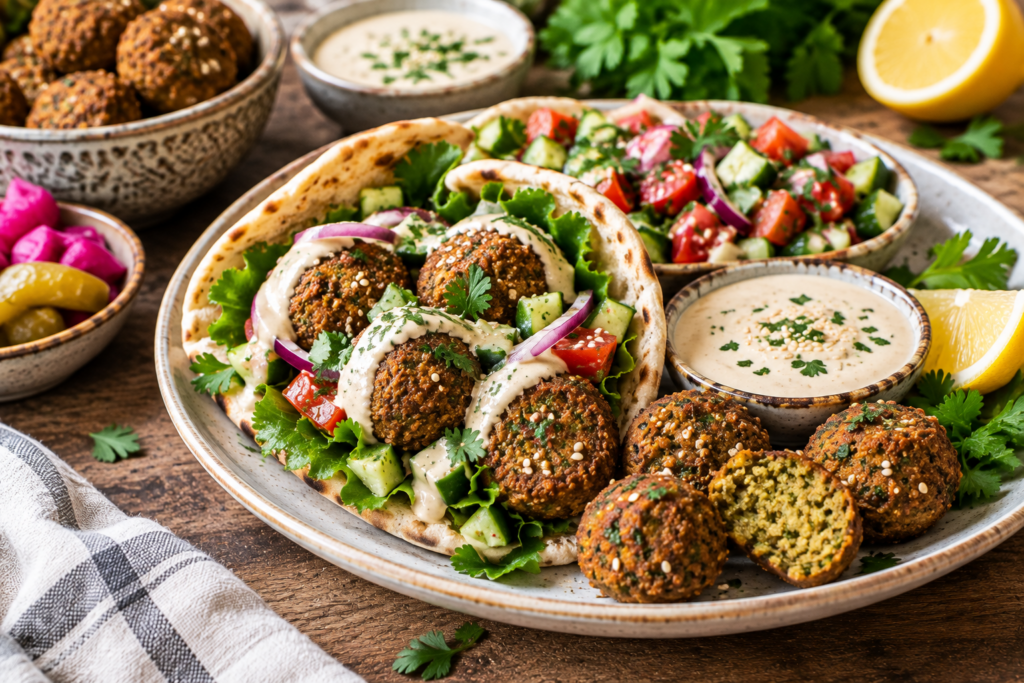
These crispy dairy-free falafel are packed with chickpeas, fresh herbs, garlic, onion, and warm spices. They’re golden and crunchy on the outside, tender inside, and served with a creamy homemade tahini sauce. A flavorful vegetarian meal that’s perfect in pita, wraps, bowls, or with a fresh salad.
Why You’ll Love These Dairy-Free Falafel
Homemade falafel takes a little more preparation than a quick weeknight dinner, but the result is absolutely worth it.
The secret is using dried chickpeas that have been soaked overnight rather than canned chickpeas. This creates the ideal texture for falafel and helps them stay together while cooking.
Fresh parsley and cilantro give the falafel plenty of flavor, while cumin, coriander, and garlic add warmth and depth.
Instead of deep-frying, these falafel are shallow-fried in olive oil until beautifully golden and crisp.
Recipe highlights:
- Naturally dairy-free
- Vegetarian
- Crispy on the outside
- Tender and flavorful inside
- Homemade tahini sauce
- Great for meal prep
- Perfect for lunch or dinner
- Delicious in pita or grain bowls
- Medium difficulty
Recipe at a Glance
| Prep | 25 minutes + overnight soaking |
| Cook | 25 minutes |
| Servings | 4 servings |
| Difficulty | Medium |
Ingredients
For the Falafel
- 250 g (1¼ cups) dried chickpeas
- 1 small yellow onion, roughly chopped
- 3 garlic cloves
- 1 cup fresh parsley leaves
- ½ cup fresh cilantro leaves
- 1 teaspoon ground cumin
- 1 teaspoon ground coriander
- ½ teaspoon smoked paprika
- ½ teaspoon salt
- ¼ teaspoon black pepper
- ½ teaspoon baking soda
- 1 tablespoon fresh lemon juice
- 2 tablespoons chickpea flour
- 1 tablespoon sesame seeds, optional
- Olive oil, for cooking
For the Tahini Sauce
- 80 g (⅓ cup) tahini
- 2 tablespoons fresh lemon juice
- 1 small garlic clove, finely grated
- 60–90 ml (¼–⅓ cup) cold water
- ¼ teaspoon salt
For Serving
- 4 pita breads
- Chopped lettuce
- Diced tomatoes
- Cucumber
- Thinly sliced red onion
- Fresh parsley
- Pickled vegetables
- Lemon wedges
Equipment
- Large bowl
- Food processor
- Measuring spoons
- Large skillet
- Wooden spoon
- Spatula
- Plate lined with paper towels
- Small bowl
- Sharp knife
- Cutting board
Step-by-Step Instructions
Place the dried chickpeas in a large bowl.
Step 1: Soak the Chickpeas
Cover them with plenty of cold water.
The chickpeas will expand significantly, so make sure there is several centimeters of water above them.
Leave them to soak for 12–18 hours.
Drain and rinse the chickpeas thoroughly before using them.
Do not cook the chickpeas.
Raw soaked chickpeas are what give traditional falafel its characteristic texture.
Step 2: Prepare the Herbs and Vegetables
Roughly chop the onion.
Add the onion, garlic, parsley, and cilantro to a food processor.
Pulse several times until everything is finely chopped.
Don’t process it into a smooth paste.
You want small pieces of herbs and onion throughout the falafel mixture.
Step 3: Add the Chickpeas
Add the soaked and drained chickpeas to the food processor.
Pulse several times until the mixture becomes finely ground and resembles coarse crumbs.
Stop occasionally and scrape down the sides of the bowl.
The mixture should hold together when pressed between your fingers but should not become a smooth puree.
Step 4: Add the Seasonings
Add:
- Cumin
- Ground coriander
- Smoked paprika
- Salt
- Black pepper
- Baking soda
- Lemon juice
- Chickpea flour
Pulse a few more times until everything is evenly combined.
If you’re using sesame seeds, stir them in afterward.
Step 5: Chill the Mixture
Transfer the falafel mixture to a bowl.
Cover and refrigerate for at least 30 minutes.
This step helps the mixture firm up and makes shaping the falafel much easier.
For even better flavor, you can refrigerate the mixture for several hours.
Step 6: Make the Tahini Sauce
While the falafel mixture chills, prepare the sauce.
Add the tahini, lemon juice, garlic, and salt to a small bowl.
The mixture may become thick and slightly stiff at first.
Gradually whisk in cold water.
Continue adding water a little at a time until the sauce becomes smooth and creamy.
Taste and adjust the lemon juice or salt if needed.
Set aside.
Step 7: Shape the Falafel
Remove the falafel mixture from the refrigerator.
Using your hands or a small cookie scoop, form the mixture into balls or slightly flattened patties.
Each falafel should be approximately 4–5 cm (1½–2 inches) wide.
If the mixture feels too wet to shape, add another tablespoon of chickpea flour.
If it seems too dry, add a teaspoon of water and mix again.
Step 8: Heat the Oil
Add approximately 1 cm (⅓ inch) of olive oil to a large skillet.
Heat over medium to medium-high heat.
To test the oil, drop in a tiny piece of falafel mixture.
It should sizzle immediately without burning.
Step 9: Cook the Falafel
Carefully place the falafel into the hot oil.
Don’t overcrowd the skillet.
Cook for approximately 3–4 minutes per side, turning carefully with a spatula.
The outside should become deep golden brown and crisp.
Continue working in batches until all the falafel are cooked.
Step 10: Drain
Transfer the cooked falafel to a plate lined with paper towels.
Allow the excess oil to drain for a minute or two.
Season lightly with a little extra salt if desired.
Step 11: Build Your Falafel Pitas
Warm the pita breads.
Fill each pita with lettuce, tomato, cucumber, red onion, and several crispy falafel.
Drizzle generously with homemade tahini sauce.
Add fresh parsley, pickled vegetables, and a squeeze of lemon.
Serve immediately.
Tips for the Best Homemade Falafel
Always use dried chickpeas rather than canned chickpeas for the best texture.
Give the chickpeas enough time to soak.
Don’t over-process the mixture into a paste.
Chill the mixture before shaping.
Make similarly sized falafel so they cook evenly.
Don’t overcrowd the skillet.
Make sure the oil is hot before cooking.
Turn the falafel carefully so they don’t break apart.
If your first falafel breaks apart in the pan, don’t panic. The mixture may simply need another tablespoon of chickpea flour or additional chilling time.
Delicious Variations
| Baked Falafel | Place the shaped falafel on a lightly oiled baking sheet. Brush or spray the tops with olive oil and bake at 220°C (425°F) for approximately 20–25 minutes, turning halfway through. They won’t be quite as crispy as fried falafel but make a lighter option. |
| Air Fryer Falafel | Air fry at approximately 190°C (375°F) for 12–16 minutes, turning halfway through. Lightly spray the falafel with oil before cooking. |
| Spicy Falafel | Add ½ teaspoon of chili flakes or a small fresh chili to the food processor. |
| Green Herb Falafel | Add extra parsley and cilantro for a brighter, more herb-forward flavor. |
| Falafel Bowl | Skip the pita and serve the falafel over rice, quinoa, lettuce, cucumber, tomatoes, and pickled onions. |
| Sweet Potato Falafel | Add a small amount of cooked mashed sweet potato to the mixture for a slightly sweeter variation. |
How to Store Dairy-Free Falafel
In the Refrigerator
Store cooked falafel in an airtight container for up to 4 days.
Reheating
For the crispiest result, reheat falafel in an oven or air fryer.
Heat at approximately 190°C (375°F) until hot and crisp.
Avoid microwaving if possible, as it can make the falafel soft.
Freezing
Cooked falafel can be frozen for up to 3 months.
Place them in a freezer-safe container with parchment paper between layers.
Reheat directly from frozen in an oven or air fryer.
Common Mistakes to Avoid
Using Canned Chickpeas
Canned chickpeas contain too much moisture and can make the mixture soft and difficult to shape.
Skipping the Chilling Step
Chilling gives the mixture time to firm up and makes shaping easier.
Over-Processing
A completely smooth mixture won’t give you the traditional falafel texture.
Oil That Isn’t Hot Enough
If the oil isn’t hot enough, the falafel can absorb too much oil and become greasy.
Making Falafel Too Large
Large falafel can brown on the outside before the center has cooked properly.
Overcrowding the Pan
Too many falafel at once lower the oil temperature and prevent proper browning.
What Makes These Falafel Dairy-Free?
Traditional falafel is naturally dairy-free because the basic mixture contains chickpeas, herbs, vegetables, and spices.
The tahini sauce is also naturally dairy-free.
The main thing to watch when serving falafel is the bread and any prepared sauces or toppings.
| Traditional Ingredient | Dairy-Free Alternative |
|---|---|
| Falafel | Naturally dairy-free |
| Tahini sauce | Naturally dairy-free |
| Pita bread | Check package label |
| Yogurt sauce | Use tahini sauce |
| Feta | Omit or use dairy-free feta |
| Creamy dressing | Tahini or lemon dressing |
Always check packaged pita breads, sauces, and toppings if you need to avoid dairy strictly.
Serving Suggestions
Serve these crispy falafel with:
- Warm pita bread
- Tahini sauce
- Hummus
- Israeli-style salad
- Cucumber and tomato salad
- Pickled onions
- Pickled turnips
- Roasted vegetables
- Rice or quinoa
- Fresh herbs
- Lemon wedges
For a complete meal, create a Mediterranean-style platter with falafel, hummus, fresh salad, warm pita, pickles, and tahini sauce.
Nutritional Information (Approximate Per Serving)
| Nutrient | Amount |
|---|---|
| Calories | 520 |
| Carbohydrates | 68 g |
| Fat | 21 g |
| Protein | 18 g |
| Fiber | 13 g |
| Sugar | 7 g |
Values are approximate and depend on the amount of oil absorbed during cooking, the pita bread, and toppings used.
Why These Falafel Are So Flavorful
The flavor starts with chickpeas, fresh parsley, and cilantro.
Cumin and coriander add warm, earthy notes, while garlic and onion create a savory foundation. Smoked paprika gives the falafel a subtle smoky depth.
Fresh lemon juice adds brightness and balances the richness of the fried falafel.
The homemade tahini sauce adds a nutty, creamy contrast that brings all the flavors together.
The combination of crispy falafel, fresh vegetables, tangy lemon, and smooth tahini makes every bite satisfying.
Final Thoughts
These crispy dairy-free falafel are a fantastic way to add something completely different to your recipe collection.
They require a little more preparation than your quick dinner recipes, especially because the chickpeas need to soak overnight, but the actual cooking process is straightforward.
Serve them in warm pita, turn them into a colorful grain bowl, or create a large Mediterranean platter for sharing.
They’re flavorful, filling, naturally dairy-free, and perfect for anyone looking for a delicious vegetarian meal.
Frequently asked Questions

Are falafel naturally dairy-free?
Yes. Traditional falafel itself is generally dairy-free. However, some sauces, toppings, and breads served with falafel may contain dairy.
Can I use canned chickpeas?
For this recipe, dried chickpeas are strongly recommended. Canned chickpeas contain more moisture and can make the falafel mixture too soft.
Can I bake these falafel?
Yes. Bake them at approximately 220°C (425°F) for 20–25 minutes, turning halfway through.
Can I make the mixture ahead of time?
Yes. The mixture can be refrigerated for up to 24 hours before shaping and cooking.
Why are my falafel falling apart?
The mixture may contain too much moisture, may not have been chilled long enough, or may need a little more chickpea flour.
What can I use instead of tahini?
For a different flavor, you can serve the falafel with hummus, lemon-garlic dressing, or a dairy-free herb sauce.
Check out also our other recipes!
If you loved this crispy falafel, there’s plenty more to discover. Explore MyDairyFreeRecipes for easy dinners, dairy-free breakfasts, healthy work lunches, creamy sauces without dairy, festive desserts, and beginner-friendly baking tips. Whether you’re cooking for everyday meals or special occasions, you’ll find simple, delicious recipes that make dairy-free eating easy and enjoyable.