
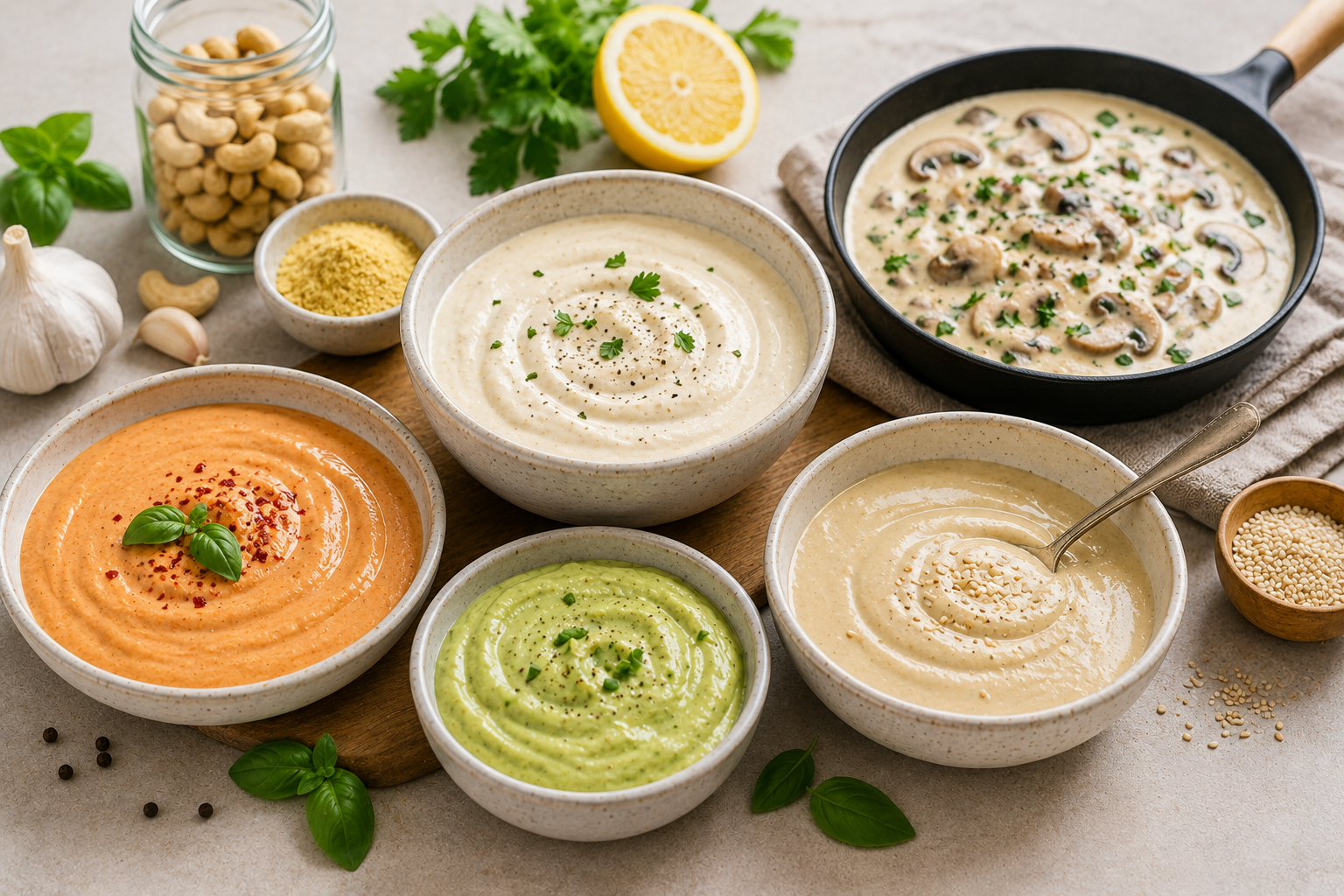
A creamy sauce can turn a simple meal into something truly comforting. Whether you’re making pasta, vegetables, chicken, fish, potatoes, or a delicious bowl, a rich and silky sauce can bring everything together.
But what if you don’t eat dairy?
Fortunately, you don’t need milk, butter, cream, or cheese to make a deliciously creamy sauce. There are plenty of natural ingredients that can provide richness, body, and flavor without using any dairy at all.
From cashews and coconut milk to white beans, tahini, avocado, and dairy-free cooking cream, there are countless ways to make creamy dairy-free sauces at home.
In this guide, you’ll discover the best ingredients for making creamy sauces without dairy, easy recipes to try, useful cooking tips, and simple substitutions for traditional cream-based sauces.
Why Make Creamy Sauces Without Dairy?
There are many reasons to choose dairy-free sauces.
Some people avoid dairy because of an allergy or intolerance, while others simply want to include more plant-based ingredients in their cooking.
Whatever your reason, removing dairy doesn’t mean giving up rich and comforting meals.
A well-made dairy-free sauce can be:
- Creamy
- Rich
- Flavorful
- Easy to prepare
- Versatile
- Made with simple ingredients
The trick is understanding which ingredients provide the texture and flavor you want.
The Best Ingredients for Creamy Dairy-Free Sauces
There isn’t one perfect replacement for cream or cheese. Different ingredients work better for different types of sauces.
Here are some of the best options.
1. Cashews
Cashews are one of the most versatile ingredients for making creamy sauces without dairy.
When soaked and blended with water, cashews become incredibly smooth and creamy.
Cashew cream works particularly well in:
- Pasta sauces
- Soups
- Mac and cheese alternatives
- Casseroles
- Dips
- Vegetable sauces
Basic cashew cream
You’ll need:
- 1 cup raw cashews
- ½–¾ cup water
- 1 tablespoon lemon juice
- A pinch of salt
Soak the cashews in water until softened. Drain them and blend with fresh water until completely smooth.
Add more water if you prefer a thinner sauce.
For extra flavor, add garlic, nutritional yeast, black pepper, or fresh herbs.
Tip: A high-speed blender will give you the smoothest result.
2. Coconut Milk and Coconut Cream
Coconut milk is an easy way to add richness to dairy-free sauces.
It works particularly well with recipes inspired by Asian, Indian, and tropical cuisines.
Use coconut milk for:
- Curries
- Vegetable sauces
- Creamy soups
- Rice dishes
- Noodle dishes
- Chicken sauces
- Fish sauces
Coconut cream is thicker and richer than regular coconut milk, making it particularly useful for sauces where you want a luxurious texture.
Keep in mind
Coconut has a distinctive flavor, so it isn’t always the best choice when you want a completely neutral sauce.
For savory dishes with garlic, ginger, curry, lime, chili, or other strong flavors, however, coconut milk can be fantastic.
3. White Beans
White beans are an underrated ingredient for creamy sauces.
Cannellini beans or other mild white beans can be blended with broth, garlic, lemon juice, and seasonings to create a surprisingly smooth sauce.
They’re particularly useful when you want a creamy sauce with a neutral flavor.
Try blending:
- Cooked white beans
- Vegetable broth
- Garlic
- Lemon juice
- Olive oil
- Black pepper
- Nutritional yeast
The result works beautifully with pasta, roasted vegetables, potatoes, or grains.
4. Nutritional Yeast
Nutritional yeast doesn’t create creaminess by itself, but it’s extremely useful for adding a savory, cheese-like flavor to dairy-free sauces.
Combine it with ingredients such as cashews, potatoes, carrots, beans, or plant-based milk.
It works particularly well in:
- Pasta sauces
- Dairy-free mac and cheese
- Potato sauces
- Vegetable dips
- Popcorn seasoning
- Creamy soups
If you’re trying to recreate the savory flavor of a cheese-based sauce, nutritional yeast is worth keeping in your pantry.
5. Dairy-Free Cooking Cream
If you want a convenient alternative to traditional cream, dairy-free cooking creams can be an easy option.
Depending on what’s available where you live, you may find cooking creams made from:
- Oats
- Soy
- Coconut
- Cashews
- Other plant-based ingredients
These products are particularly useful when you’re adapting a familiar recipe and want a simple cream replacement.
Always check the ingredients and allergen information, especially if you need to avoid milk strictly.
6. Avocado
Avocado provides natural creaminess and works particularly well in fresh sauces.
Blend ripe avocado with lemon or lime juice, garlic, herbs, and a little water or olive oil.
The result is perfect for:
- Pasta
- Tacos
- Wraps
- Grain bowls
- Roasted vegetables
- Salads
Because avocado is best when fresh, these sauces are generally better eaten shortly after preparation.
7. Tahini
Tahini is made from ground sesame seeds and is an excellent base for creamy dairy-free dressings and sauces.
A simple tahini sauce requires just a few ingredients:
- Tahini
- Lemon juice
- Water
- Garlic
- Salt
As you add water and whisk, tahini transforms into a creamy sauce.
Use it with:
- Roasted vegetables
- Falafel
- Grain bowls
- Salads
- Chickpeas
- Sweet potatoes
- Grilled chicken
It’s one of the easiest dairy-free sauces to make.
How to Make a Creamy Dairy-Free Pasta Sauce
Pasta is one of the easiest dishes to adapt to dairy-free cooking.
You can create a creamy sauce without using traditional cream or cheese.
Here’s a simple formula:
Creamy ingredient + liquid + flavor + seasoning
For example:
Cashews + vegetable broth + garlic + nutritional yeast
Or:
Coconut milk + curry paste + ginger + lime
Or:
White beans + vegetable stock + garlic + lemon
Or:
Dairy-free cooking cream + mushrooms + garlic + herbs
The possibilities are almost endless.
Easy Dairy-Free Garlic Cream Sauce
This simple sauce is perfect for pasta, vegetables, chicken, or potatoes.
Ingredients
- 1 tablespoon olive oil
- 3 garlic cloves, finely chopped
- 1 cup unsweetened dairy-free cooking cream
- ½ cup vegetable broth
- 1–2 tablespoons nutritional yeast
- Black pepper
- Fresh parsley
- A squeeze of lemon juice
Method
- Heat the olive oil in a pan.
- Add the garlic and cook gently until fragrant.
- Add the dairy-free cooking cream and vegetable broth.
- Stir in nutritional yeast.
- Simmer gently until the sauce thickens.
- Season with black pepper and lemon juice.
- Finish with fresh parsley.
Serve immediately with your favorite dairy-free pasta.
Easy Creamy Cashew Pasta Sauce
For a richer homemade sauce, cashews are an excellent choice.
Ingredients
- 1 cup soaked raw cashews
- ¾ cup water
- 1 garlic clove
- 2 tablespoons nutritional yeast
- 1 tablespoon lemon juice
- Salt and black pepper
Method
Blend everything until completely smooth.
If the sauce is too thick, add more water a tablespoon at a time.
Pour over cooked pasta and warm gently in a pan.
Add sautéed mushrooms, spinach, broccoli, peas, or roasted vegetables for a complete meal.
Creamy Mushroom Sauce Without Dairy
Mushrooms are naturally rich in umami flavor, which makes them perfect for a dairy-free creamy sauce.
Sauté sliced mushrooms with garlic and onion.
Add vegetable broth and your preferred dairy-free cream alternative.
Season with:
- Thyme
- Black pepper
- Garlic
- Parsley
- A little lemon juice
Serve the sauce with pasta, rice, mashed potatoes, chicken, or roasted vegetables.
Creamy Tomato Sauce Without Cream
You don’t need heavy cream to make tomato sauce creamy.
Blend cooked tomatoes with cashews, white beans, coconut milk, or dairy-free cooking cream.
A simple combination is:
- Crushed tomatoes
- Garlic
- Onion
- Cashew cream
- Italian herbs
- Black pepper
- Olive oil
The acidity of the tomatoes balances the richness of the creamy ingredient.
Creamy Dairy-Free Cheese Sauce
If you’re missing creamy cheese sauces, you can create a flavorful alternative with vegetables and nutritional yeast.
A popular combination includes cooked potatoes and carrots blended with:
- Nutritional yeast
- Garlic powder
- Onion powder
- Lemon juice
- Plant-based milk
- Olive oil
- Salt
Blend until smooth and creamy.
Use the sauce for:
- Pasta
- Nachos
- Baked potatoes
- Vegetables
- Burgers
- Dairy-free mac and cheese
How to Thicken Dairy-Free Sauces
Sometimes your sauce tastes great but isn’t quite thick enough.
Fortunately, there are several ways to thicken a sauce without dairy.
Reduce the sauce
One of the easiest methods is simply to simmer the sauce gently so excess liquid evaporates.
Use a roux
A traditional roux can be made with dairy-free butter or oil and flour.
Add plant-based milk or broth gradually while whisking.
Blend in cashews
Cashews naturally thicken sauces when blended.
Add white beans
Blended beans can provide body without strongly affecting the flavor.
Use cornstarch
Mix cornstarch with a little cold water before adding it to the hot sauce. This can help thicken sauces quickly.
How to Make a Dairy-Free Sauce More Flavorful
Creaminess is only one part of a great sauce.
A delicious sauce also needs balance.
Try combining these five elements:
Fat
Olive oil, coconut milk, avocado, nuts, or tahini.
Salt
Salt brings out the flavor of the other ingredients.
Acidity
Lemon juice, lime juice, vinegar, or tomatoes can brighten rich sauces.
Umami
Mushrooms, nutritional yeast, miso, tomatoes, or tamari can add depth.
Aromatics
Garlic, onion, ginger, herbs, and spices create the foundation of the sauce.
When a sauce tastes flat, don’t automatically add more salt. Try a little lemon juice, garlic, or nutritional yeast instead.
Dairy-Free Sauce Ideas for Different Meals
| Meal | Dairy-Free Sauce |
|---|---|
| Pasta | Cashew cream sauce |
| Rice bowls | Coconut curry sauce |
| Roasted vegetables | Lemon-tahini sauce |
| Tacos | Avocado-lime sauce |
| Potatoes | Garlic dairy-free cream sauce |
| Chicken | Mushroom cream sauce |
| Fish | Lemon-herb sauce |
| Grain bowls | Tahini dressing |
| Burgers | Avocado sauce |
| Mac and cheese | Nutritional yeast cheese sauce |
How to Store Homemade Dairy-Free Sauces
Most homemade sauces can be stored in the refrigerator in an airtight container, although storage time varies depending on the ingredients.
Sauces containing fresh avocado, herbs, or other highly perishable ingredients may change in texture or color more quickly.
Before storing a sauce, allow it to cool appropriately and refrigerate it promptly.
When reheating creamy sauces, use gentle heat and stir frequently. Some sauces may thicken considerably when chilled, so adding a small splash of water or plant-based milk can help restore the original consistency.
If you’re making a sauce with coconut milk, cashews, or another ingredient that separates during storage, simply stir or blend it again before serving.
Common Mistakes When Making Dairy-Free Creamy Sauces
Learning a few common mistakes can help you get much better results.
Using sweetened plant-based milk
Sweetened milk can make a savory sauce taste surprisingly sweet.
Better choice: Use unsweetened, unflavored plant-based milk.
Not soaking cashews long enough
Hard cashews may not blend into a completely smooth sauce.
Better choice: Soak them until soft, or use a high-speed blender.
Adding too much liquid
A sauce that’s too thin can be difficult to rescue.
Better approach: Add liquid gradually and adjust the consistency as you go.
Forgetting acidity
Rich sauces can sometimes taste heavy.
Solution: Add lemon juice or another acidic ingredient to brighten the flavor.
Overheating plant-based cream
Some dairy-free cream alternatives can change texture when exposed to very high heat.
Better approach: Simmer gently and follow the cooking instructions for packaged products.
Can You Make a Dairy-Free White Sauce?
Yes!
A traditional white sauce can easily be made without dairy.
Instead of butter, use olive oil or dairy-free butter.
Instead of cow’s milk, use unsweetened oat or soy milk.
Instead of relying on cheese for flavor, add garlic, nutritional yeast, herbs, mustard, or other seasonings.
Basic dairy-free white sauce
- 2 tablespoons olive oil or dairy-free butter
- 2 tablespoons flour
- 2 cups unsweetened plant-based milk
- Salt
- Black pepper
- Nutmeg, optional
Warm the oil or dairy-free butter, whisk in the flour, and gradually add the plant-based milk while whisking.
Cook gently until thickened.
This sauce can be used for:
- Lasagna
- Pasta
- Vegetable bakes
- Potatoes
- Casseroles
Can You Make Creamy Sauces Without Nuts?
Absolutely.
If you have a nut allergy or simply don’t want to use nuts, there are plenty of alternatives.
Try:
- White beans
- Coconut milk
- Avocado
- Tahini, if sesame is suitable for you
- Dairy-free cooking cream
- Potatoes
- Cauliflower
- Oats
Blended cauliflower and potatoes can be particularly useful for creating creamy sauces while adding vegetables to your meal.
Final Thoughts
You don’t need dairy to make a sauce creamy, rich, and delicious.
Ingredients such as cashews, coconut milk, white beans, avocado, tahini, nutritional yeast, and dairy-free cooking cream can all transform simple meals into something special.
The key is to choose your ingredients based on the type of sauce you’re making. Cashews are excellent for neutral creamy sauces, coconut milk works beautifully with curries, tahini is perfect for dressings and grain bowls, and white beans can create a surprisingly creamy base for pasta and vegetables.
Once you understand these basic techniques, you’ll find that making creamy sauces without dairy is much easier than it first appears.
So next time you’re making pasta, vegetables, potatoes, rice, or a comforting casserole, don’t reach automatically for the cream. Open your pantry and experiment with one of these delicious dairy-free alternatives instead.
Looking for more inspiration? Explore MyDairyFreeRecipes for easy dairy-free recipes, cooking tips, sauces, dinners, snacks, desserts, and everyday meal ideas.