
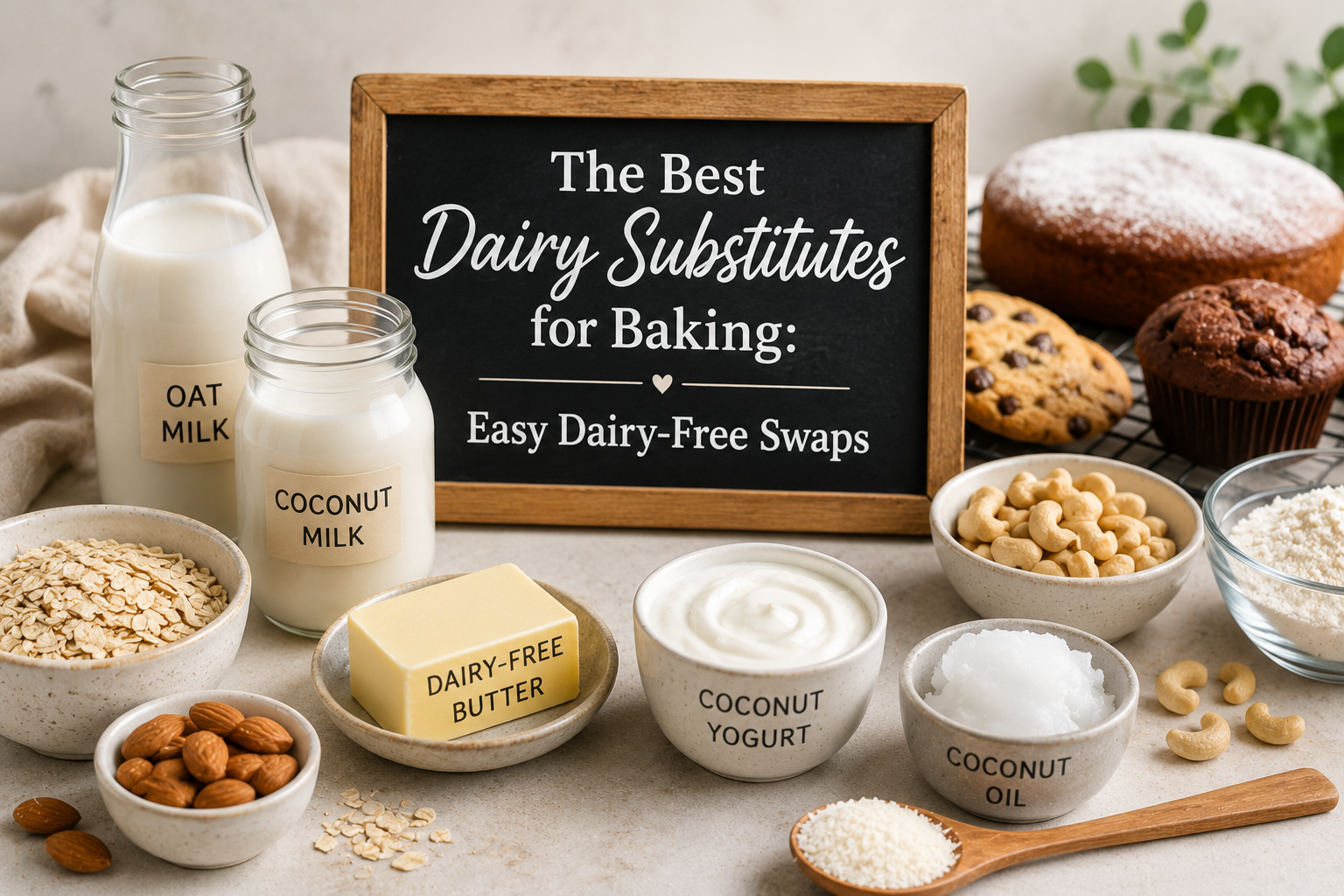
Baking without dairy may sound difficult when you’re used to recipes containing butter, milk, cream, yogurt, or cheese. But with the right substitutions, you can make delicious cakes, cookies, muffins, pancakes, brownies, and breads without using traditional dairy ingredients.
The secret is understanding what each dairy ingredient does in a recipe.
Milk adds moisture. Butter provides fat and flavor. Cream creates richness, while yogurt can add moisture and tenderness. Once you understand these functions, choosing the right dairy-free alternative becomes much easier.
Whether you’re new to dairy-free baking or simply want to adapt your favorite recipes, this guide covers the best dairy substitutes for baking, how to use them, and which alternatives work best for different types of recipes.
Why Bake Without Dairy?
There are many reasons to choose dairy-free baking.
Some people avoid dairy because of an allergy or intolerance, while others prefer to reduce their consumption of animal products or experiment with plant-based ingredients.
Whatever your reason, you don’t have to give up your favorite baked treats.
With suitable substitutions, you can make:
- Dairy-free cakes
- Dairy-free cookies
- Dairy-free brownies
- Dairy-free muffins
- Dairy-free pancakes
- Dairy-free cupcakes
- Dairy-free breads
- Dairy-free pies
- Dairy-free desserts
The key is choosing a substitute that performs a similar job to the original ingredient.
The Most Common Dairy Ingredients in Baking
Before looking at alternatives, it helps to understand what traditional dairy ingredients actually do.
Milk
Milk adds moisture and liquid to batter and dough.
It can also contribute to browning and texture.
Butter
Butter provides fat, flavor, moisture, and structure.
It can also help create flaky pastry and tender cookies.
Cream
Cream adds fat and richness.
It’s often used in frostings, fillings, desserts, and rich baked goods.
Yogurt
Yogurt adds moisture and tenderness.
Its acidity can also interact with baking soda in some recipes.
Buttermilk
Buttermilk adds moisture and acidity.
It’s commonly used in pancakes, muffins, cakes, and quick breads.
Cream cheese
Cream cheese is often used in frostings, cheesecakes, fillings, and certain baked goods.
Now let’s look at the best dairy-free alternatives.
1. Plant-Based Milk
Plant-based milk is usually the easiest dairy substitute for baking.
Depending on the recipe, you can use:
- Oat milk
- Soy milk
- Almond milk
- Coconut milk
- Pea-based milk
- Cashew milk
In many recipes, plant-based milk can replace cow’s milk in approximately the same quantity.
Which plant-based milk is best for baking?
Oat milk
Oat milk has a mild flavor and works well in:
- Cakes
- Muffins
- Pancakes
- Cookies
- Bread
- Brownies
It’s one of the most versatile options.
Soy milk
Soy milk is another excellent all-purpose choice.
Its relatively neutral flavor makes it useful for both sweet and savory baking.
Almond milk
Almond milk adds a subtle nutty flavor.
It’s especially good in cookies, muffins, cakes, and breakfast recipes.
Coconut milk
Coconut milk provides more richness and can add a noticeable coconut flavor.
It works particularly well in tropical cakes, chocolate desserts, and recipes where coconut flavor is welcome.
Important tip
For most baking recipes, choose unsweetened and unflavored plant-based milk.
Sweetened or vanilla-flavored milk can change the flavor of your recipe.
2. Dairy-Free Butter
Butter can be one of the more complicated ingredients to replace because it contributes both fat and structure.
Fortunately, there are many dairy-free butter alternatives available.
Dairy-free butter can work particularly well in:
- Cookies
- Cakes
- Cupcakes
- Pie crusts
- Pastries
- Frostings
When choosing a dairy-free butter alternative, look for one designed for baking if possible.
Some products have a higher water content and may behave differently from traditional butter.
Can you replace butter with oil?
Sometimes.
Oil works particularly well in cakes and muffins because it provides fat and moisture.
However, oil doesn’t behave exactly like solid butter.
For example, replacing butter with oil in cookies can produce a softer, flatter cookie.
So if you’re adapting a recipe, consider what texture you want.
3. Coconut Oil
Coconut oil can be a useful alternative to butter in many baking recipes.
It works particularly well in:
- Cookies
- Brownies
- Muffins
- Granola
- No-bake desserts
Because coconut oil becomes solid when cool and liquid when warm, its texture can sometimes resemble butter.
However, it can add a coconut flavor, particularly when using virgin coconut oil.
If you don’t want that flavor, look for refined coconut oil.
4. Neutral Vegetable Oil
Neutral oils such as canola, sunflower, or other suitable vegetable oils can work well in cakes and muffins.
Oil is particularly useful when you want a moist, tender texture.
It’s commonly used in:
- Chocolate cake
- Banana bread
- Carrot cake
- Muffins
- Quick breads
- Brownies
Because oil is liquid at room temperature, it doesn’t provide exactly the same structure as butter.
For this reason, it isn’t always a direct substitute in recipes where butter is important for texture.
5. Dairy-Free Yogurt
Dairy-free yogurt can be an excellent substitute for traditional yogurt in baking.
Depending on what’s available, you may find yogurt made from:
- Coconut
- Soy
- Oats
- Almonds
Unsweetened dairy-free yogurt is usually the most versatile option.
It can help create moist and tender:
- Muffins
- Cakes
- Pancakes
- Quick breads
- Loaves
It can also be used in some frostings and fillings.
Tip
If a recipe calls for Greek yogurt, choose a thick dairy-free yogurt rather than a very thin product.
6. Applesauce
Applesauce isn’t a direct replacement for every dairy ingredient, but it can be extremely useful in dairy-free baking.
It adds moisture and can replace some of the fat in recipes.
Try it in:
- Muffins
- Quick breads
- Cakes
- Brownies
- Cookies
Because applesauce adds natural sweetness and moisture, you may need to adjust other ingredients slightly.
It works particularly well in recipes where a soft, moist texture is desirable.
7. Mashed Banana
Mashed banana is another useful baking ingredient.
It can add:
- Moisture
- Sweetness
- Soft texture
It’s especially good in:
- Banana bread
- Muffins
- Pancakes
- Breakfast cookies
- Snack cakes
Keep in mind that banana has a strong flavor, so it isn’t suitable when you want a neutral-tasting substitution.
8. Coconut Cream
Coconut cream is one of the best dairy-free alternatives when you need richness.
It can work well in:
- Frostings
- Chocolate desserts
- Pies
- Puddings
- Dessert fillings
- No-bake cheesecakes
The high fat content creates a creamy texture similar to what you’d expect from heavy cream.
However, coconut cream has a noticeable coconut flavor.
9. Cashew Cream
Cashew cream is made by soaking and blending cashews with water.
It can be used to create rich, creamy dairy-free desserts.
Try it in:
- Cheesecakes
- Dessert fillings
- Chocolate mousse
- Frostings
- Creamy puddings
Because cashews have a relatively mild flavor, they can provide creaminess without overpowering the other ingredients.
10. Dairy-Free Cream Cheese
If you’re making cheesecake or cream cheese frosting, a dairy-free cream cheese alternative is usually the simplest choice.
Plant-based cream cheese products can be made from ingredients such as nuts, coconut, soy, or other plant-based ingredients.
Use them for:
- Cheesecake
- Carrot cake frosting
- Cupcake frosting
- Dessert fillings
- Dips
Different products vary significantly in texture, so choose one designed for baking or frosting when possible.
11. How to Replace Buttermilk Without Dairy
Buttermilk can easily be recreated with plant-based milk.
Start with approximately one cup of unsweetened plant-based milk.
Add an acidic ingredient such as:
- Lemon juice
- White vinegar
- Apple cider vinegar
Allow it to sit briefly before using it.
This creates an acidic dairy-free liquid that can work well in pancakes, muffins, cakes, and quick breads.
Simple dairy-free buttermilk
1 cup unsweetened plant-based milk + 1 tablespoon lemon juice or vinegar
Stir and allow it to stand for several minutes.
Then use it in your recipe.
12. How to Replace Heavy Cream
Heavy cream is often used for richness, moisture, and creamy texture.
Depending on the recipe, alternatives include:
- Coconut cream
- Dairy-free whipping cream
- Cashew cream
- Thick dairy-free yogurt
- Full-fat coconut milk
For whipped desserts, use a product specifically designed for whipping.
Regular plant-based milk is generally too thin to replace heavy cream directly in recipes where the cream needs to hold its shape.
Dairy-Free Baking Substitution Chart
Here’s a quick reference when adapting recipes.
| Traditional ingredient | Dairy-free alternative |
|---|---|
| Cow’s milk | Oat, soy, almond, or other plant-based milk |
| Butter | Dairy-free butter |
| Butter in cakes | Neutral oil or dairy-free butter |
| Heavy cream | Coconut cream or dairy-free cream |
| Yogurt | Thick dairy-free yogurt |
| Buttermilk | Plant-based milk + lemon juice or vinegar |
| Cream cheese | Dairy-free cream cheese |
| Milk chocolate | Dairy-free chocolate |
| Sour cream | Thick dairy-free yogurt |
| Condensed milk | Dairy-free condensed milk alternative |
The Best Dairy-Free Milk for Different Baked Goods
Choosing the right plant-based milk can make a difference.
| Baked good | Good dairy-free option |
|---|---|
| Chocolate cake | Oat or soy milk |
| Vanilla cake | Oat or soy milk |
| Muffins | Oat, soy, or almond milk |
| Pancakes | Oat or soy milk |
| Cookies | Oat or almond milk |
| Brownies | Soy or oat milk |
| Coconut cake | Coconut milk |
| Banana bread | Oat or almond milk |
| Bread | Soy or oat milk |
These aren’t strict rules. Your favorite choice may depend on flavor, availability, and the specific recipe.
How to Make Dairy-Free Frosting
Frosting can be one of the trickiest parts of dairy-free baking because traditional buttercream relies heavily on butter.
Fortunately, there are several alternatives.
Dairy-Free Buttercream
Use dairy-free butter with powdered sugar and vanilla extract.
Add a small amount of plant-based milk if necessary to achieve the right consistency.
Coconut Cream Frosting
Whipped coconut cream can make a rich topping for cakes and cupcakes.
Dairy-Free Cream Cheese Frosting
Combine dairy-free cream cheese with powdered sugar and vanilla.
This works especially well with carrot cake, spice cake, and cupcakes.
Chocolate Ganache
Use dairy-free dark chocolate and coconut cream to create a rich chocolate topping.
How to Bake Dairy-Free Cookies
Cookies can be particularly sensitive to changes in fat.
If a recipe calls for butter, dairy-free butter is usually the closest alternative.
You can also use coconut oil in some recipes, but expect the texture to change.
For softer cookies
Use ingredients that add moisture, such as:
- Dairy-free yogurt
- Applesauce
- Nut butter
For crispier cookies
A suitable dairy-free butter alternative and careful baking can help create a crisp texture.
Always allow cookies to cool properly before judging their final texture.
How to Make Dairy-Free Cakes Moist
One of the biggest concerns when baking without dairy is ending up with a dry cake.
Fortunately, dairy isn’t the only ingredient that can create moisture.
Try using:
- Plant-based milk
- Oil
- Dairy-free yogurt
- Applesauce
- Mashed banana
- Fruit purée
- Coconut milk
Oil-based cakes are often particularly moist because the fat remains liquid at room temperature.
Dairy-Free Baking Tips for Beginners
If you’re new to dairy-free baking, these tips can save you some frustration.
Start with simple recipes
Begin with recipes that already use oil or plant-based milk.
They’re often easier to adapt than recipes that rely heavily on butter and cream.
Don’t replace everything at once
If you’re adapting a recipe, identify which dairy ingredients are actually present.
Then replace each one with the most suitable alternative.
Use unsweetened ingredients
Unless you’re specifically looking for extra sweetness, unsweetened plant-based milk and yogurt give you more control over the recipe.
Measure carefully
Baking is more precise than general cooking.
Use accurate measurements, especially when substituting liquids and fats.
Don’t overmix
Overmixing can lead to dense cakes and muffins.
Mix the batter only until the ingredients are combined unless the recipe specifically requires more mixing.
What About Dairy-Free Chocolate?
Chocolate is an important ingredient in many baked desserts, but not all chocolate is dairy-free.
Milk chocolate naturally contains milk, while some dark chocolates may also contain milk ingredients.
If you’re baking for someone who strictly avoids dairy, check the ingredient list and allergen information carefully.
Look for chocolate specifically labeled as dairy-free when appropriate.
Chocolate chips also deserve attention because many standard products contain milk ingredients.
Dairy-Free Baking for Allergies
If you’re baking for someone with a diagnosed milk allergy, simply choosing a recipe labeled “dairy-free” may not be enough.
Check every packaged ingredient, including:
- Chocolate
- Margarine
- Baking mixes
- Sprinkles
- Frosting
- Cookies
- Protein powders
- Flavorings
Also consider cross-contact during preparation.
Use clean equipment and work surfaces, and follow the person’s specific allergy-management guidance.
Common Dairy-Free Baking Mistakes
Mistake 1: Using sweetened plant milk
This can make your cake or bread unexpectedly sweet.
Solution: Choose unsweetened milk unless the recipe calls for sweetness.
Mistake 2: Assuming every butter substitute works the same way
Different dairy-free butter alternatives can have different fat and water contents.
Solution: Choose a product intended for baking when possible.
Mistake 3: Replacing butter with oil in every recipe
Oil and butter behave differently.
Solution: Oil is often excellent for cakes and muffins but may produce different results in cookies and pastry.
Mistake 4: Using thin dairy-free yogurt
A thin yogurt may add too much liquid to a recipe.
Solution: Choose a thick dairy-free yogurt when replacing Greek yogurt or sour cream.
Mistake 5: Forgetting hidden dairy
Chocolate, margarine, and prepared baking ingredients can contain milk.
Solution: Read labels carefully.
A Simple Dairy-Free Baking Formula
If you’re adapting a recipe, ask yourself what the dairy ingredient contributes.
Is it adding liquid?
Try plant-based milk.
Is it adding fat?
Try dairy-free butter, oil, or coconut oil.
Is it adding creaminess?
Try coconut cream, cashew cream, or dairy-free cream.
Is it adding acidity?
Try plant-based milk combined with lemon juice or vinegar.
Is it adding structure?
Dairy-free butter may be a better choice than oil.
This simple approach makes dairy-free baking much less intimidating.
Easy Dairy-Free Baking Ideas to Try
Once you have your favorite substitutes, try making:
Breakfast
- Dairy-free pancakes
- Banana bread
- Blueberry muffins
- Cinnamon rolls
- Oat muffins
Afternoon treats
- Chocolate chip cookies
- Brownies
- Lemon loaf
- Apple muffins
- Oat cookies
Celebration desserts
- Chocolate cake
- Carrot cake
- Dairy-free cheesecake
- Cupcakes
- Chocolate tart
Holiday baking
- Gingerbread cookies
- Apple pie
- Cinnamon cookies
- Chocolate truffles
- Fruit crumble
Final Thoughts
Baking without dairy doesn’t mean giving up delicious cakes, cookies, muffins, brownies, or desserts.
The most important thing is choosing a substitute based on the role that the dairy ingredient plays in the recipe.
Plant-based milk is an easy replacement for regular milk, dairy-free butter works particularly well in cookies and pastry, oil creates moist cakes, coconut cream adds richness, and dairy-free yogurt can help create tender muffins and cakes.
Once you understand these basic swaps, adapting recipes becomes much easier.
And you may even discover that some dairy-free baked goods become new favorites in your kitchen.
So don’t be afraid to experiment. Start with simple recipes, make one substitution at a time, and keep notes about what works best.
With the right ingredients and a little practice, dairy-free baking can be just as delicious, creative, and satisfying as traditional baking.
Looking for more inspiration? Explore MyDairyFreeRecipes for easy dairy-free baking recipes, desserts, breakfasts, snacks, and practical cooking tips.